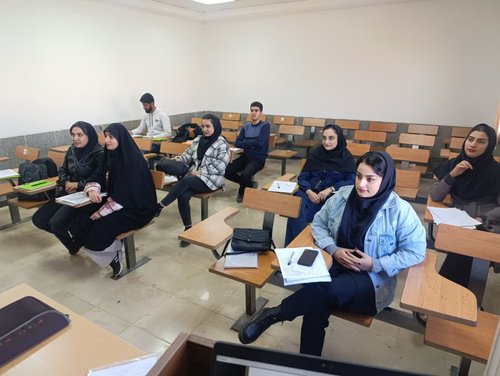

The "Environmental Improvement with a Landscape Ecology Approach" Chair was held at the Faculty of Natural Resources, Lorestan University.
 Dec 18, 2024
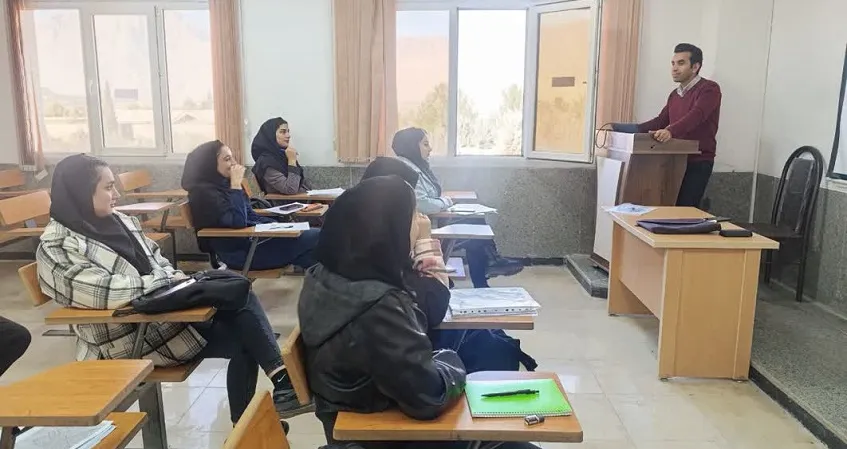
On the occasion of Research and Technology Week, a scientific chair on the subject of "Environmental Remediation with a Landscape Ecology Approach" was held by the Faculty of Natural Resources of Lorestan University.
According to the Public Relations of Lorestan University, this scientific meeting was presented by Dr. Morteza Ghobadi, a faculty member of the Department of Environmental Engineering and Director of the University's Environment House.
The purpose of this scientific chair was to examine applied concepts in the field of environmental remediation with an emphasis on the use of landscape ecology principles and methods.
Dr. Ghobadi first defined environmental remediation and explained the key principles of this process.
Environmental remediation, as an interdisciplinary process, was introduced as including planned interventions to reduce negative human impacts on nature and improve ecological functions.
Subsequently, the step-by-step process of environmental remediation was described.
This process included identifying damaged areas, analyzing the current situation, providing management solutions, and implementing corrective actions.
One of the key topics of the meeting was to examine the relationship between landscape ecology and environmental remediation.
Dr. Ghobadi explained that landscape ecology, with a comprehensive approach, studies spatial patterns and relationships between the components of the land.
This approach enables the identification of sensitive points and the development of optimal strategies for environmental remediation.
In the final part of the meeting, Dr. Ghobadi emphasized the importance of using quantitative landscape metrics.
These metrics include indicators for assessing connectivity, biodiversity, land use sustainability, and spatial distribution.
By utilizing these analyses, corrective actions can be designed in a way that preserves the ecological sustainability of the land and ensures its long-term productivity.