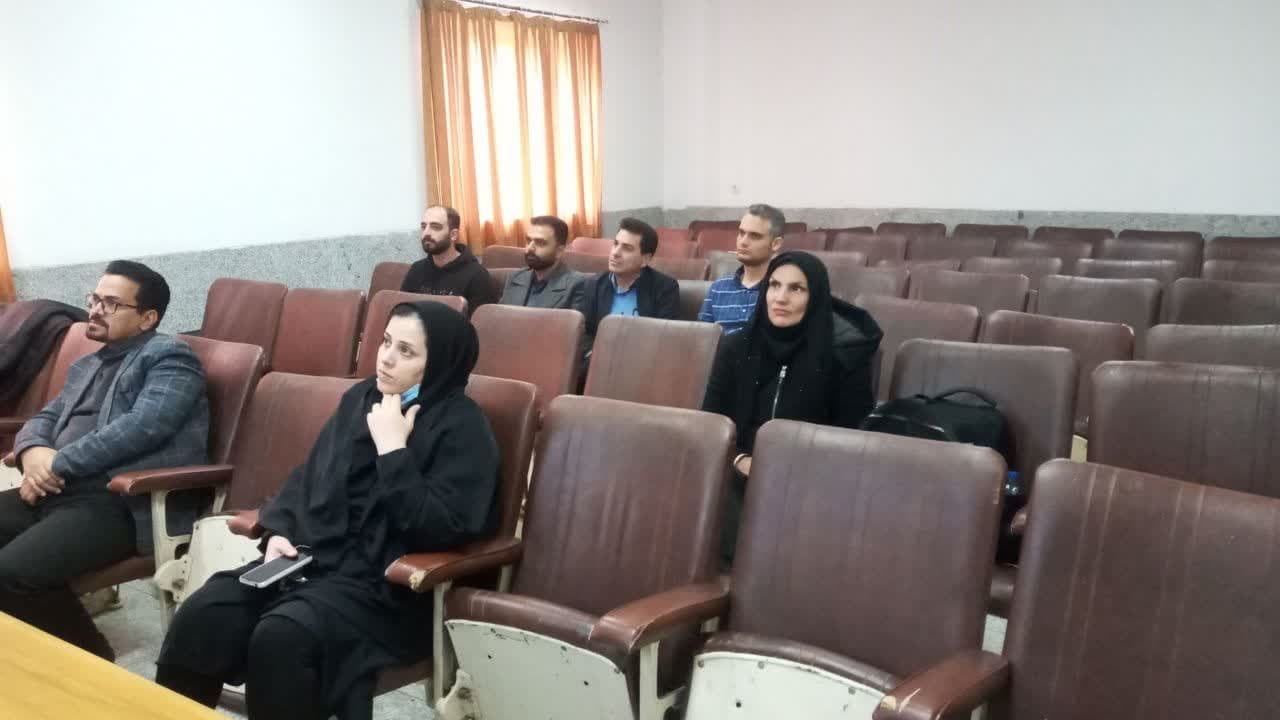

The Faculty of Natural Resources at Lorestan University held a session on the opportunities and challenges of the One Billion Tree Planting Initiative.
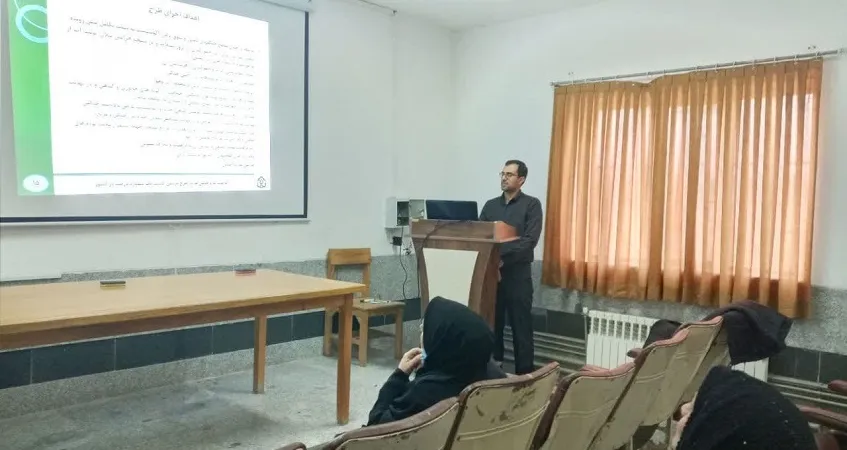 Dec 21, 2024
On the occasion of Research and Technology Week, a scientific chair on the opportunities and challenges in the national initiative for planting one billion trees was held by the Faculty of Natural Resources, Lorestan University.
According to the Public Relations of Lorestan University, in this scientific workshop, which was held before the recent holidays with a presentation by Dr. Seyed Vahid Seyedna, Assistant Professor of the Department of Forest Science and Engineering, Faculty of Natural Resources, Lorestan University, he explained the general status of the world's forests and the historical trend of deforestation, and addressed international commitments to increase forests.
Dr. Seyedna, by introducing Iran's forests in terms of area, climatic conditions, species diversity, and different vegetation zones, and comparing it with the global forest situation, explained the importance of implementing the national initiative for planting one billion trees in the country in line with international commitments and its necessities and requirements.
Furthermore, the goals and strategic strategies, prerequisites and executive and organizational mechanisms, four executive programs including forest restoration and development, development of vegetation cover in rangelands and deserts, development of green space and wood cultivation, scheduling, and technical recommendations for the implementation of this national initiative were presented.
Also, the methods and process of preparing maps of areas suitable for the implementation of the initiative and prioritizing these areas based on the ecological model of the studies of this initiative were explained.
Dr. Seyedna mentioned the development and equipping of governmental and private nurseries to produce the required standard seedlings, structured public participation including non-governmental organizations, village councils and municipalities, and local communities, using the potential of university graduates in related specialized fields, and using previous successful experiences at the national and international levels as opportunities for this initiative. He also mentioned the worrying trend of destruction of natural forests and the lack of serious control of destructive factors, the lack of provision and allocation of sufficient credit, the lack of cooperation of some relevant organizations, and the weakness of educational, promotional, and informational programs as challenges and weaknesses of this initiative.
At the end of the chair, while presenting suggestions for improving this initiative, the professors present at the meeting, Dr. Haghighizadeh and Dr. Mirazadi, students, and other attendees, by presenting their views and questions, enriched the mentioned scientific chair.