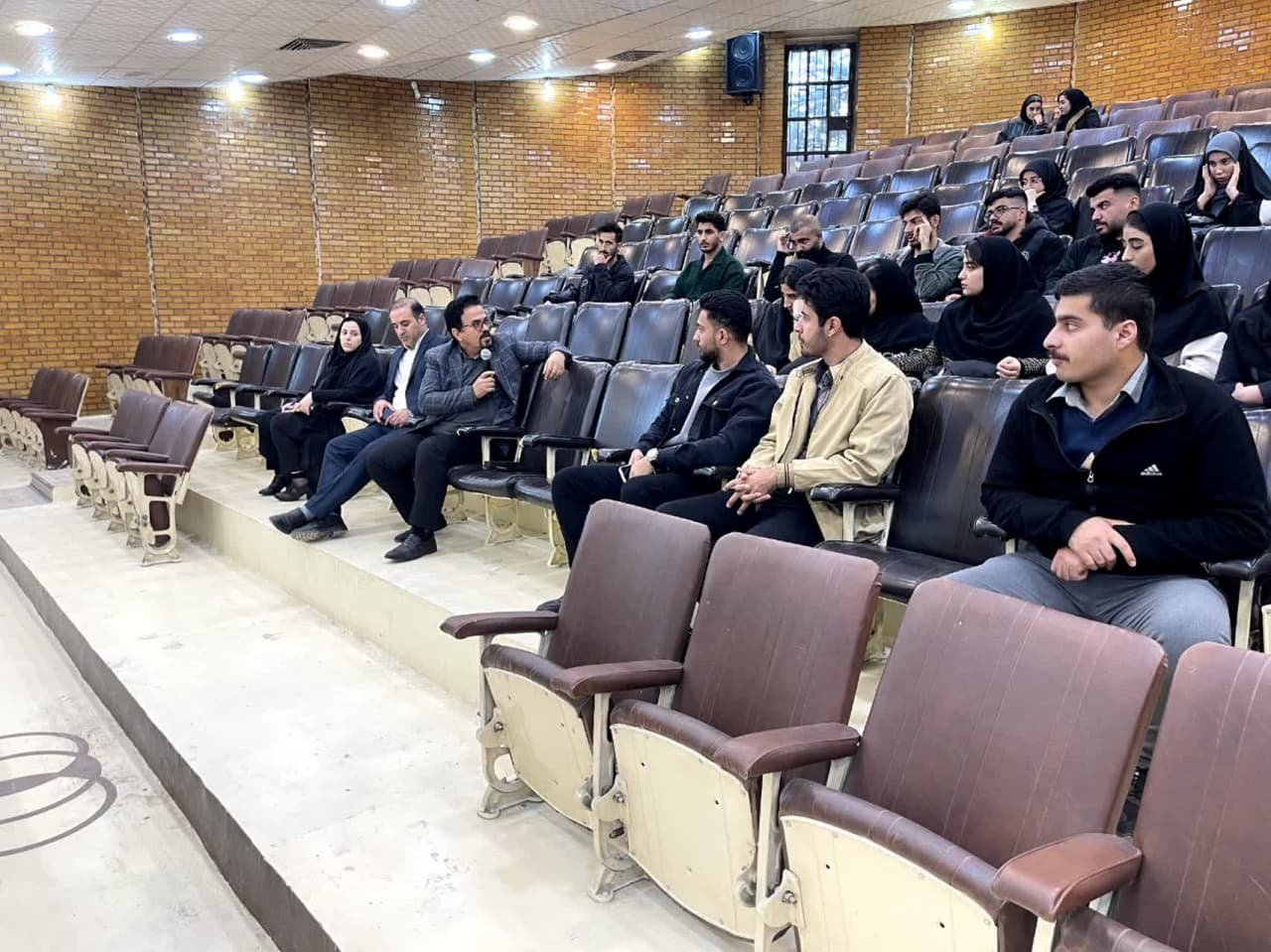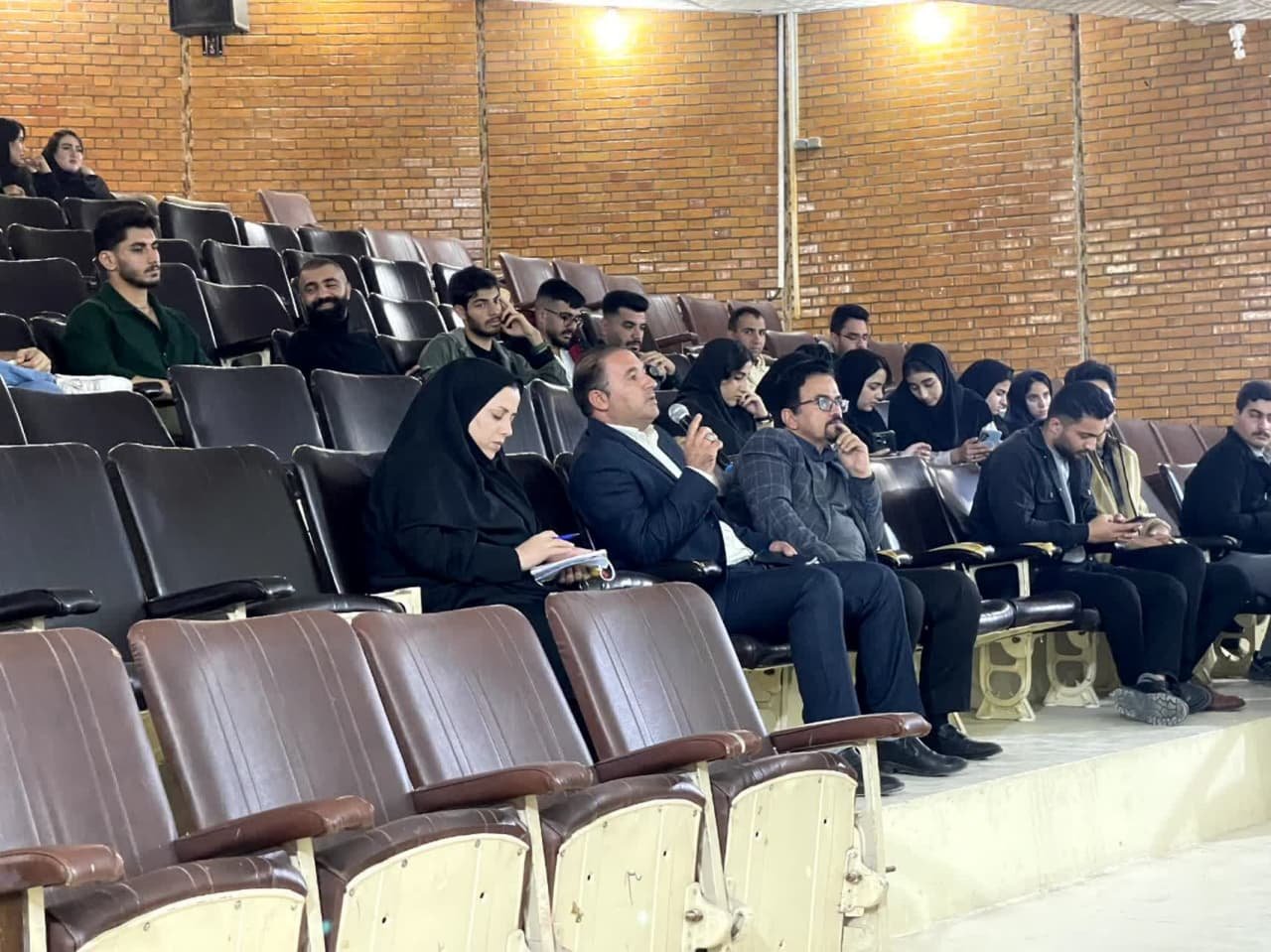

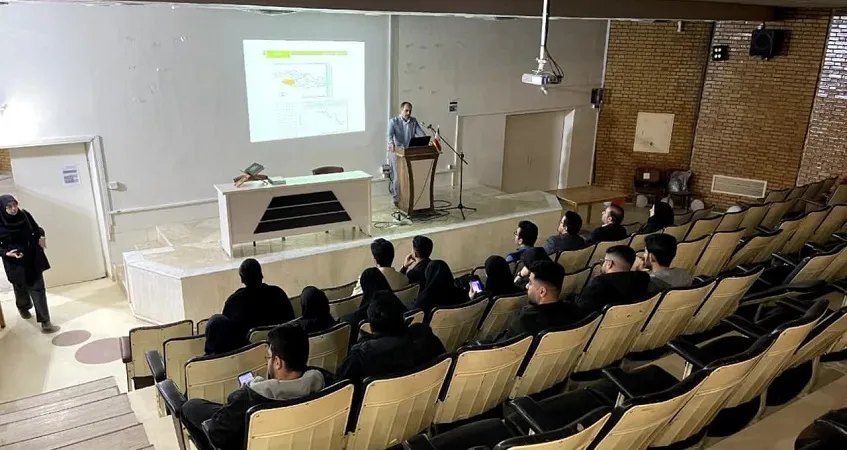
The specialized session "Water Resources Governance in Watersheds" was held on the occasion of Research and Technology Week.
 Dec 02, 2024
In observance of Research and Technology Week, and in line with the National Conference on Civilizational Governance of Science and Technology, a specialized session on the topic of Water Resource Governance in Watersheds: Challenges and Management Tools, was held with a presentation by Dr. Mehdi Soleimani Motlagh, Secretary of the Green Management Steering Council of Lorestan University and faculty member of the Faculty of Natural Resources, in the conference hall of the Faculty of Agriculture and Natural Resources, Lorestan University.
According to the Public Relations of Lorestan University, Dr. Ali Haghighizadeh served as the critic and secretary of the session, which was held on Sunday, December 2nd of the current year, with Dr. Ashkan Banan in attendance.
The session examined the overall status of water resources in the world, Iran, and Lorestan province, addressing major water challenges, including overexploitation and budget constraints for water resources, the intensification of extreme hydrological phenomena (drought and floods) due to climate change, the absence of an online monitoring system and reliable water resource balance, low irrigation efficiency in the agricultural sector, and local and regional water disputes.
Therefore, water governance was proposed as a process through which water resources are managed through accountability, public and watershed resident participation, the availability of online information, transparency, and regulations.
Furthermore, obstacles and challenges to the formation of good water resource governance, which lead to the consequences of a water resource crisis, environmental crisis, and socio-economic challenges, were addressed, including the main and underlying factors such as administrative corruption, lack of information transparency, disregard for public participation, weak social and cultural conditions, deficiencies or non-implementation of laws, and a lack of public education and awareness.
Finally, important water governance tools, including technical, economic, administrative, legal, institutional, social, and participatory measures, were outlined.