
Horticulture Department
The Horticultural Science Engineering Department is one of the first active educational departments in the Faculty of Agriculture at Lorestan University, which began its activities in 1989 by admitting students in the Associate's degree program in Plant Production Technology. This department has also been active since 1998 in the Bachelor's degree program in Applied Plant Production Engineering with a Horticultural specialization, and has graduated 16 cohorts of students in the Associate's degree in Plant Production and 10 cohorts of students in the Applied Bachelor's degree in Plant Production Engineering with a Horticultural Science specialization, and has gained valuable experiences in this path.
Due to the overarching policies of Lorestan University regarding the elimination of Associate's degree programs and the enhancement of educational levels, this educational department has eliminated the Associate's and Applied Bachelor's degree programs and, instead, has launched the Bachelor's degree program in Horticultural Science and Engineering.
At the postgraduate level, this department successfully admitted students in two Master's degree programs and one Doctoral program in the past:
- Plant Production Engineering - Horticultural Plant Breeding (Master's degree, inactive and eliminated since 2017)
- Horticultural Science - Ornamental Plants (Master's degree, active)
- Horticultural Science - Ornamental Plants (Doctoral degree, inactive and eliminated since 2017).
Currently, with regard to the revision and amendment of the curricula of the Horticultural Science and Engineering programs in 2017, this department is active in the following programs at the postgraduate level, and students are studying:
Master's degree in Horticultural Science and Engineering (four specializations):
- Greenhouse Product Production
- Ornamental Plants
- Medicinal Plants
- Fruit Trees
Doctoral degree in Horticultural Science and Engineering (two specializations):
- Production Physiology and Postharvest of Horticultural Plants
- Breeding and Biotechnology of Horticultural Plants
Laboratories of the Horticultural Science Department:
1- Tissue Culture Laboratory
2- Biochemistry Laboratory
3- Medicinal Plants Laboratory
4- Postharvest Physiology Laboratory
5- Plant Taxonomy Laboratory
1- Plant Cell and Tissue Culture Laboratory
The Plant Cell and Tissue Culture Laboratory is currently used for teaching the practical course of plant tissue culture and for conducting Master's theses and Doctoral dissertations. This laboratory has three separate sections including a culture media preparation room, a plant culture room, and a plant growth and maintenance room.
The culture media preparation room has the necessary equipment for making various plant culture media, which includes two vertical autoclaves, a water distiller, a pH meter, a refrigerator, digital scales, a hot plate stirrer, a stereo microscope, various glassware, and measuring containers. The culture room includes three horizontal laminar flow hoods along with sterilizers. The growth room has the capacity to hold 7,000 culture vessels. The shelves of the growth room are equipped with various light spectra (8 different light spectra).
Currently, more than 40 different plant species, including fruit trees, ornamental plants, medicinal plants, and aquarium plants, are propagated and maintained in this laboratory. This laboratory also has a specialized acclimatization greenhouse for acclimatizing tissue-cultured plants.
2- Biochemistry Laboratory:
The Biochemistry Laboratory, as a key infrastructure for research in biological and agricultural sciences, plays an important role in studying the physiological and biochemical mechanisms of plants. This laboratory is equipped with specialized equipment and a controlled environment that enables the performance of quantitative and qualitative experiments related to primary and secondary plant metabolism. The main focus of this laboratory is on evaluating plant responses to environmental conditions, biotic and abiotic stresses, and examining changes in biochemical compounds and enzyme activities.
In addition to standard equipment such as refrigerated centrifuges, vortex mixers, UV-Vis spectrophotometers, pH meters, water baths, ovens, and chemical hoods, this laboratory has a safe and standard environment that allows for working with fresh and processed plant samples with high precision.
3- Medicinal Plants Laboratory:
The Medicinal Plants Laboratory of the Horticultural Science Department provides a scientific platform for education and research in the field of medicinal plants. In this laboratory, various methods are used to extract and process the active ingredients of medicinal plants. The main activities of this laboratory include the following:
Measurement and extraction of essential oils: Essential oil extraction using hydrodistillation.
Extraction of extracts and plant oils: Including extraction by Soxhlet extraction, (Maceration) and (Perculation) and the use of ultrasound technology (Ultrasonication)
Examination and evaluation of plant stomata: Studying the morphological characteristics of stomata using advanced microscopes, in order to analyze the anatomical responses of the plant to different environmental conditions
4- Postharvest Physiology Laboratory:
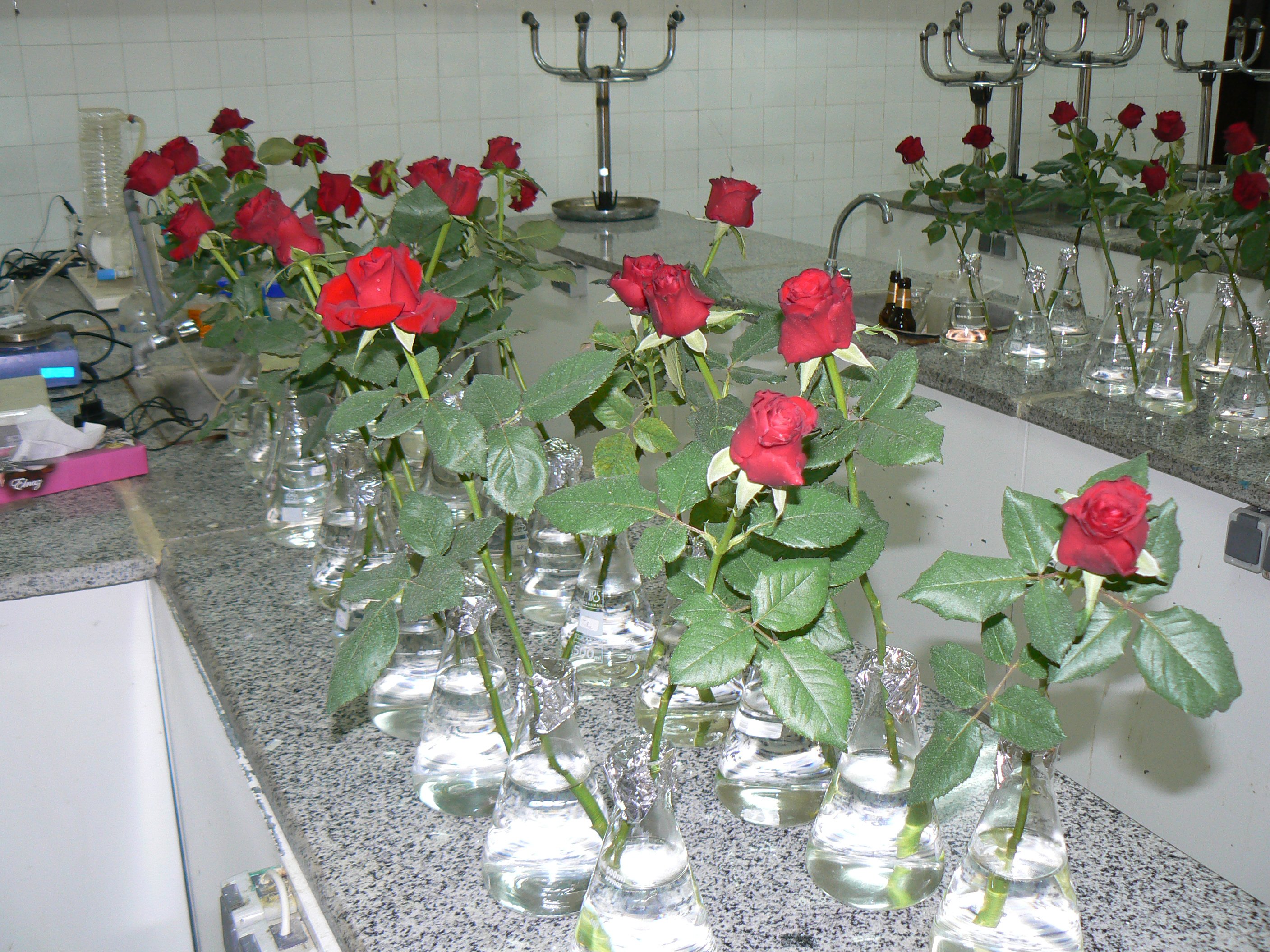
In this laboratory, postharvest work on horticultural plants is carried out.
5- Plant Taxonomy Laboratory:
This laboratory, with various educational and research microscopes, utilizes these facilities for teaching the practical units of Plant Taxonomy 1 and 2, Weeds, Cellular and Molecular courses.